

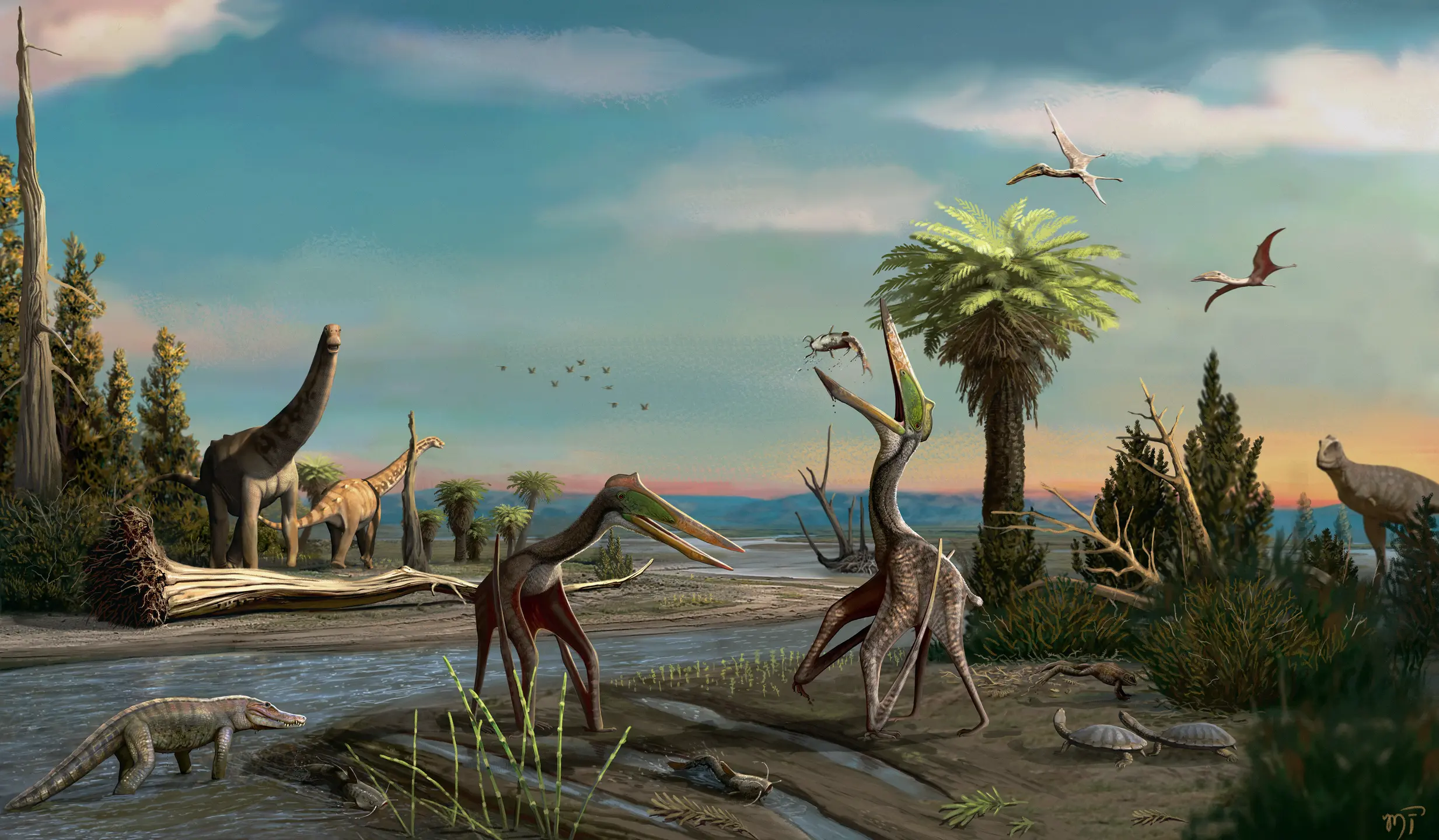

Research lines
My research seeks to understand the diversity and evolutionary history of archosaurian reptiles, with an emphasis on sauropod dinosaurs, especially Titanosauria. I investigate their evolutionary relationships, transformations in their anatomy, and the processes associated with the origin, diversification, and distribution of their lineages through geological time. The Mesozoic record of South America is the main focus of these investigations, contextualized through comparisons with faunas from other regions.
These studies integrate the discovery and documentation of fossils, research on scientific collections, and the analysis of anatomical, phylogenetic, and geological evidence. Body fossils and trace fossils provide complementary information about the diversity of fossil vertebrates, their ways of life, and the environments they inhabited. The four research lines presented below bring this evidence together to investigate both the evolutionary history of organisms and changes in faunal composition and past ecosystems.

Palaeontological prospecting and collection curation
The discovery of fossils and documentation of their depositional context expand our knowledge of vertebrate diversity and provide evidence for investigating their evolutionary history. I carry out prospecting and collection activities in Brazilian sedimentary basins, with an emphasis on Mesozoic reptiles, linking the study of specimens to records of their provenance and stratigraphic and taphonomic information.
This work encompasses fossil preparation, identification, cataloguing and long-term care, as well as research on historical collections and training in preparation and curatorial procedures. It aims to expand scientific collections and ensure the preservation of specimens and the information underpinning their study, contributing to the conservation and appreciation of Brazil’s palaeontological heritage.
Methods and procedures: field prospecting and collection, recording of provenance and stratigraphic context, taphonomic documentation, fossil preparation, specimen identification and cataloguing, conservation and curation of palaeontological collections.

Palaeoecology and palaeoichnology
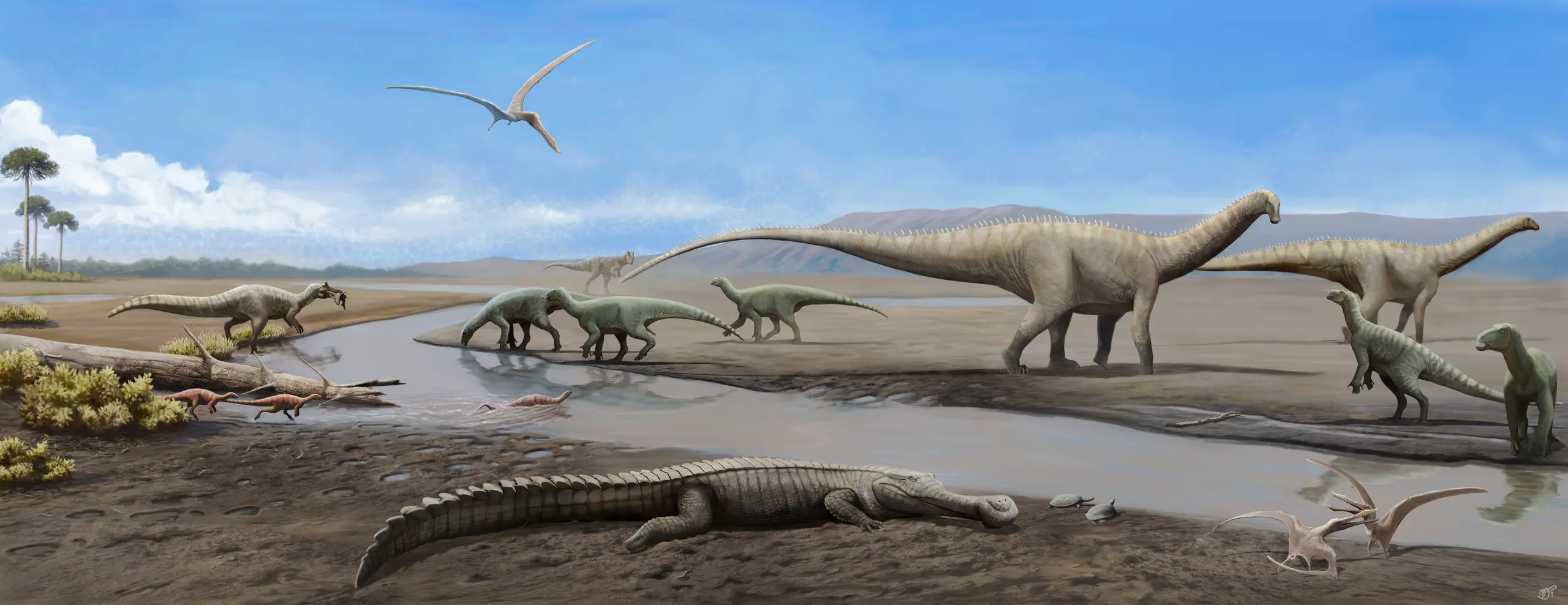
Body fossils and trace fossils provide complementary evidence about vertebrate communities, their ways of life and the environments they inhabited. I investigate these relationships in Brazilian Mesozoic ecosystems, integrating the study of fossils with their sedimentological and stratigraphic context. This approach allows me to characterise faunal composition and investigate aspects of behaviour and the relationships between organisms and their environment.
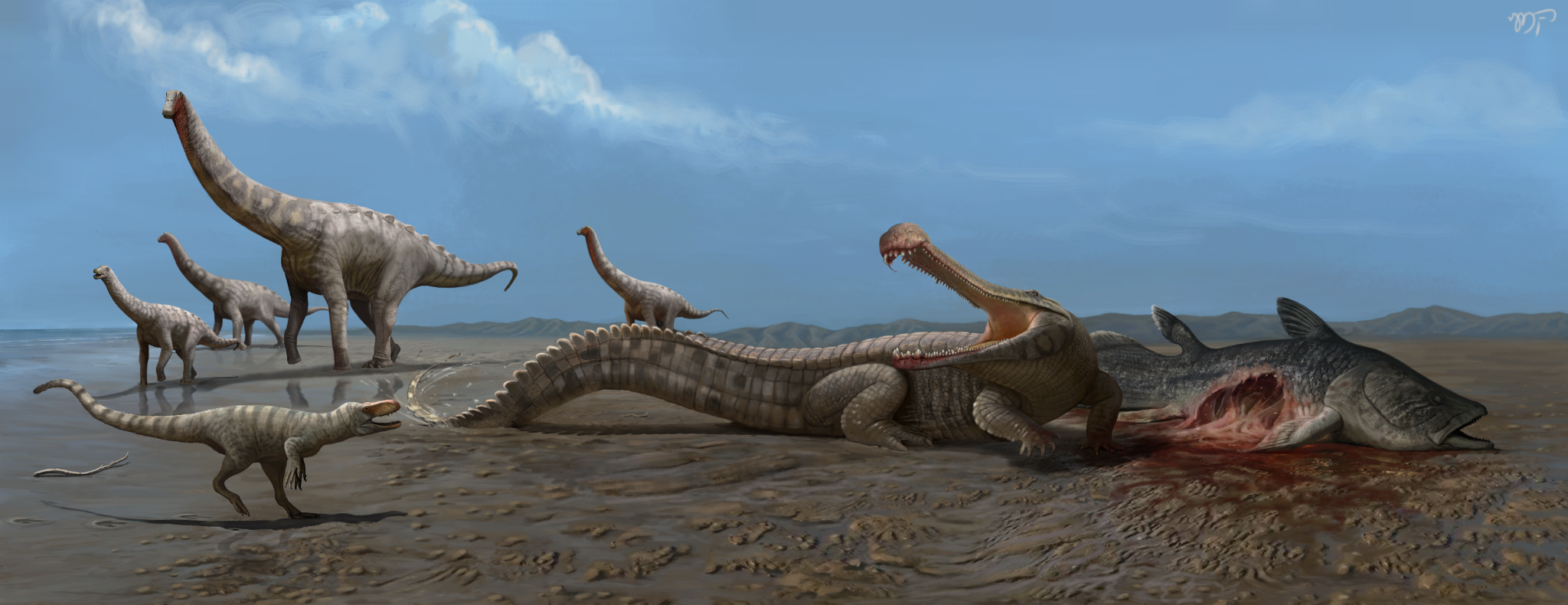
These interpretations consider the processes that form fossil concentrations and the preservation biases that influence the representation of faunas in the geological record. Drawing on this evidence, I seek to assess how environmental and climatic changes may have contributed to changes in community composition and distribution, providing a basis for palaeoecological reconstructions.
Methods and procedures: description and comparison of trace fossils, ichnotaxonomic and morphometric analyses, taphonomic characterisation of fossil assemblages, comparison of faunal composition and integrated interpretation of palaeontological, sedimentological and stratigraphic evidence.

Osteology, systematics and taxonomy
Fossil anatomy provides fundamental evidence for recognising taxa, investigating evolutionary relationships and understanding evolutionary transformations. My work focuses on fossil archosaurs, particularly sauropod dinosaurs and Titanosauria, through the description of previously unstudied material and the revision of specimens and taxa examined in earlier studies.
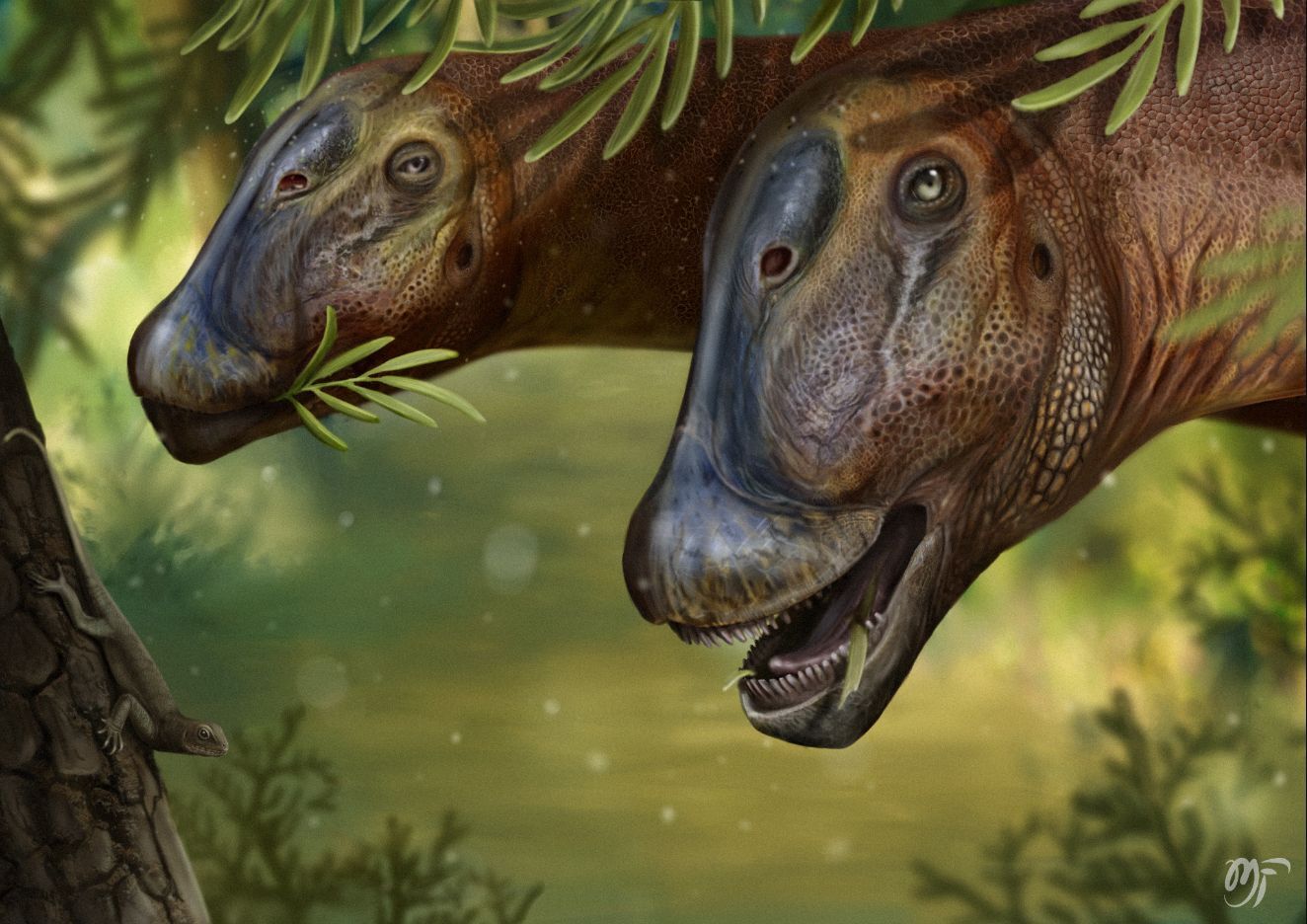
Comparisons among specimens allow me to assess variation associated with taxonomic differences, the ontogenetic development of individuals, individual variability and pathological conditions. I also seek to evaluate hypotheses of homology and refine the definition and coding of morphological characters used in phylogenetic analyses. These studies underpin taxonomic diagnoses, hypotheses of relationships and interpretations of the evolution of archosaur anatomy.
Methods and procedures: osteological description and comparative anatomy, osteohistology and analysis of bone microstructure, microcomputed tomography, segmentation and three-dimensional reconstruction, linear and geometric morphometrics, analyses of morphological dissimilarity and modularity, construction and revision of phylogenetic matrices of morphological characters.

Palaeobiogeography and macroevolution
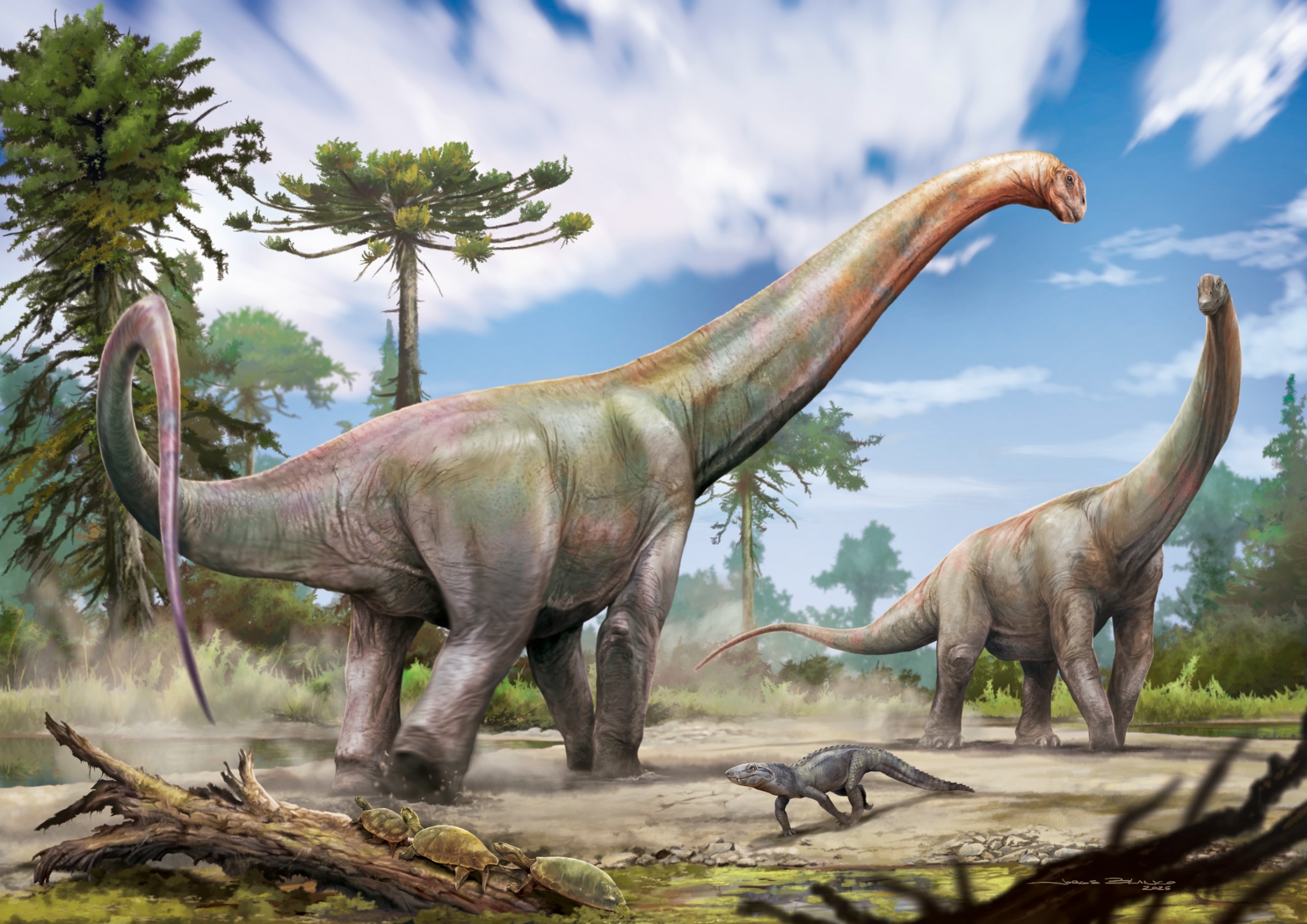
The distribution of fossils in space and time, interpreted in light of evolutionary relationships, allows us to investigate the origin and diversification of lineages and their relationship with past geographical changes. I investigate these processes in archosaurs, with an emphasis on sauropods and the evolutionary history of Titanosauria. The South American record is the main focus, contextualised through comparisons with faunas from other regions.
I integrate phylogenetic hypotheses, ages of fossil occurrences and palaeogeographical information to estimate divergence times, reconstruct ancestral distributions and evaluate dispersal and vicariance scenarios. I also investigate the evolution of morphological diversity and body size, considering the effects of fossil-record sampling and phylogenetic and stratigraphic uncertainties on these interpretations.
Methods and procedures: temporal calibration of phylogenies and divergence-time estimation, reconstruction of ancestral distributions under biogeographical models, phylogenetic comparative methods, analyses of morphological disparity and body-size evolution, assessment of sampling effects and phylogenetic and stratigraphic uncertainties.